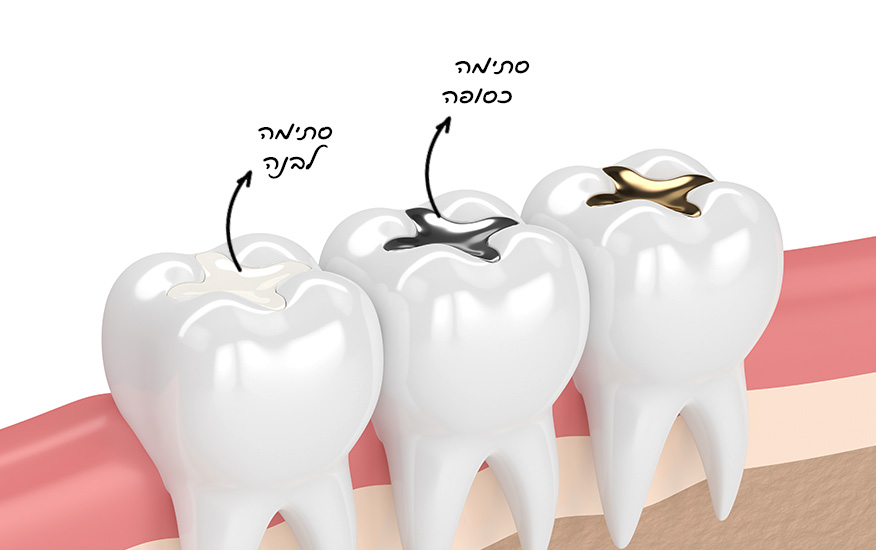
White fillings are the accepted standard in modern dentistry. Today’s advanced technology offers a wide range of materials: nano-particle fillings, porcelain-particle composites, and more.
White fillings are the accepted standard in modern dentistry. Today’s advanced technology offers a wide range of materials: nano-particle fillings, porcelain-particle composites, and more.
The type of white filling is chosen according to the treatment needed—for example, aesthetic work on front teeth or treating cavities in back teeth. Switching to white fillings is not only about appearance; it also reflects the understanding that amalgam (gray) fillings should be discontinued for health reasons. Components of fillings can be released into the body over time.
The type of white filling is chosen according to the treatment needed—for example, aesthetic work on front teeth or treating cavities in back teeth. Switching to white fillings is not only about appearance; it also reflects the understanding that amalgam (gray) fillings should be discontinued for health reasons. Components of fillings can be released into the body over time.
Some types of white fillings may also contain ingredients with potential adverse effects, such as bisphenol A (BPA). BPA is a chemical found in plastics; accumulated exposure can act similarly to hormones, so reducing exposure is recommended. In principle, BPA in certain white fillings becomes part of the filling material and is not expected to be released.
Some types of white fillings may also contain ingredients with potential adverse effects, such as bisphenol A (BPA). BPA is a chemical found in plastics; accumulated exposure can act similarly to hormones, so reducing exposure is recommended. In principle, BPA in certain white fillings becomes part of the filling material and is not expected to be released.
The most advanced generation of white fillings contains no bisphenol
Want to replace your amalgam fillings or need new white fillings?